Showing posts with label connectionist learning. Show all posts

Tuesday, 20 December 2022

The concept of overgeneralisation and goodness of rank : Overfitting is not about comparing training and test learning curves

Preamble 

    Walt Disney Hall,
Los Angeles  (Wikipedia)


Unfortunately, it is still thought in machine learning classes that overfitting can be detected by comparing training and test learning curves on the single model's performance.  The origins of this misconception is unknown. Looks like an urban legend has been diffused into main practice  and  even in academic works the misconception taken granted. Overfitting's definition appeared to be inherently about comparing complexities of two (or more) models. Models manifest themself as inductive biases modeller or data scientist inform in their tasks. This makes overfitting in reality a Bayesian concept at its core.  It is not about comparing training and test learning curves that if model is following a noise, but pairwise model comparison-testing procedure to select  more plausable belief among our beliefs that has the least information: entities should not be multiplied beyond necessity i.e., Occam's razor. We introduce a new concept in clarifying this practically, goodness of rank to distinguish from well known goodness of fit, and clarify concepts and provide steps to attribute models with overfitted or under-fitted models.

Poorly generalised model : Overgeneralisation or under-generalisation

The practice that is described in machine learning classes, and  practiced in industry that overfitting is about your model following training set closely but fails to generalised in test set. This is not overfitted model but a model that fails to generalise: a phenomena should be called Overgeneralisation (or under-generalisation). 

A procedure to detect overfitted model : Goodness of rank

We have provided complexity based abstract description of model selection procedure, here as complexity ranking: we will repeat this procedure with identification of the overfilled model explicitly.

In the following steps a sketch of an algorithmic recipe for complexity ranking of inductive biases via informal steps, overfitted model identification explicitly:

  1. Define a complexity measure $\mathscr{C}$($\mathscr{M}$) over an inductive bias.
  2. Define a generalisation measure  $\mathscr{G}$($\mathscr{M}$, $\mathscr{D}$) over and inductive bias and dataset.
  3. Select a set of inductive biases, at least-two, $\mathscr{M}_{1}$ and $\mathscr{M}_{2}$.
  4. Produce complexity and generalisation measures on ($\mathscr{M}$, $\mathscr{D}$): Here for two inductive biases: $\mathscr{C}_{1}$, $\mathscr{C}_{2}$,   $\mathscr{G}_{1}$, $\mathscr{G}_{2}$.
  5. Ranking of  $\mathscr{M}_{1}$ and $\mathscr{M}_{2}$:  $argmax \{ \mathscr{G}_{1}, \mathscr{G}_{2}\}$ and $argmin \{ \mathscr{C}_{1}, \mathscr{C}_{2}\}$ 
  6. $\mathscr{M}_{1}$ is an overfitted model compare to $\mathscr{M}_{2}$   if $\mathscr{G}_{1} <= \mathscr{G}_{2}$ and   $\mathscr{C}_{1} \gt \mathscr{C}_{2}$. 
  7. $\mathscr{M}_{2}$ is an overfitted model compare to $\mathscr{M}_{1}$ if $\mathscr{G}_{2} <= \mathscr{G}_{1}$ and   $\mathscr{C}_{2} \gt \mathscr{C}_{1}$.
  8. $\mathscr{M}_{1}$ is an underfitted model compare to $\mathscr{M}_{2}$   if $\mathscr{G}_{1} < \mathscr{G}_{2}$ and   $\mathscr{C}_{1} < \mathscr{C}_{2}$.
  9. $\mathscr{M}_{2}$ is an underfitted model compare to $\mathscr{M}_{1}$   if $\mathscr{G}_{2} < \mathscr{G}_{1}$ and   $\mathscr{C}_{2} < \mathscr{C}_{1}$.
If two model has the same complexity, then much better generalised model should be selected, in this case we can't conclude that either model is overfitted but generalised differently. Remembering that overfitting is about complexity ranking : Goodness of rank.

But overgeneralisation sounded like overfitting, isn't it?

Operationally overgeneralisation and overfitting implies two different things. Overgeneralisation operationally can be detected with a single model. Because, we can measure the generalisation performance of the model alone with data, in statistical literature this is called goodness of fit. Moreover overgeneralisation can also be called under-generalisation, as both implies poor generalisation performance.

However, overfitting implies a model overly performed compare to an other model i.e., model overfits but compare to what? Practically speaking, overgeneralisation can be detected via holdout method, but not overfitting. Overfitting goes beyond goodness of fit to goodness of rank as we provided recipe as pairwise model comparison.

Conclusion

The practice of comparing training and test learning curves for overfitting diffused into machine learning so deeply, the concept is almost always thought a bit in a fuzzy-way, even in distinguished lectures explicitly. Older textbooks and papers correctly identifies overfitting as comparison problem. As a practitioner, if we bear in mind that overfitting is about complexity ranking and it requires more than one model or inductive bias in order to be identified, then we are in better shape in selecting better model. Overfitting can not be detected via data alone on a single model.  


To make things clear, we provide concept definitions.

Generalisation A concept that if model can perform as good as the data it has not seen before, however seen here is a bit vague, it could have seen data points that are close to the data would be better suited in the context of supervised learning as oppose to compositional learning.

Goodness of fit An approach to check if model is generalised well.  

Goodness of rank An approach to check if model is overfitted or under-fitted comparable to other models.

Holdout method A metod to build a model on the portion of available data and measure the goodness of fit on the holdout part of the data, i.e., test and train.

Inductive bias  A set of assumptions data scientist made in building a representation of the real world, this manifest as model and the assumptions that come with a model.

Model  A model is a biased view of the reality from data scientist. Usually appears as a function of observables $X$ and parameters $\Theta$, $f(X, \Theta)$. The different values of $\Theta$ do not constitute a different model.  See also  What is a statistical model?,  Peter McCullagh 

Occam's razor (Principle of parsimony)  A principle that less complex explanation reflects reality better. Entities should not be multiplied beyond necessity.  

Overgeneralisation (Under-generalisation) If we have a good performance on the training set but very bad performance on the test set, model said to overgeneralise or under-generalise; as a result of goodness of fit testing, i.e., comparing learning curves over test and train datasets.

Regularisation An approach to augment model to improve generalisation.

Postscript Notes

Note: Occam’s razor is a ranking problem: Generalisation is not 

The holy grail of machine learning in practice is hold-out methods. We want to make sure that we don’t overgeneralise. However, a misconception has been propagated that overgeneralisation is mistakenly thought of as synonymous with overfitting. Overfitting has a different connotation as ranking different models rather than measuring the generalisation ability of a single model. The generalisation gap between training and test sets is not about Occam’s razor. 

Tuesday, 20 September 2022

Building robust AI systems: Is an artificial intelligent agent just a probabilistic boolean function?


Preamble
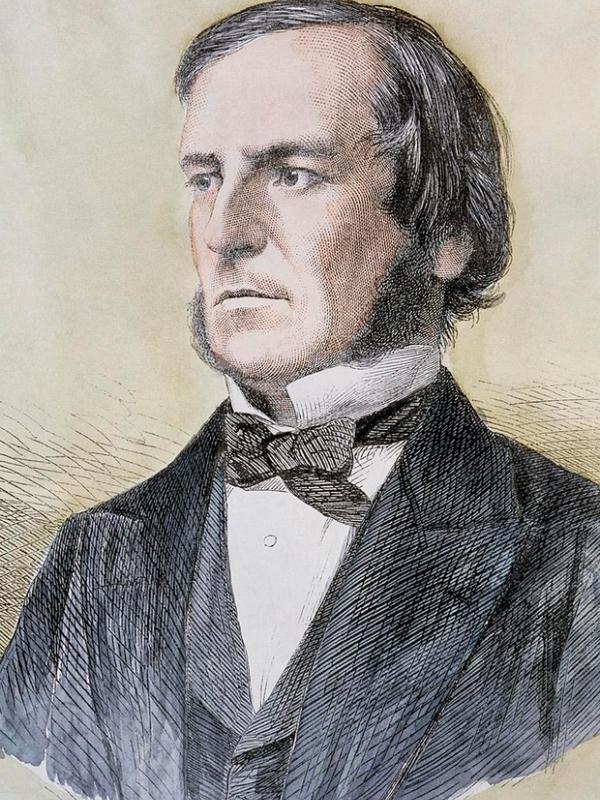
    George Boole (Wikipedia)

Agent, AI agent or an intelligent agent is used often to describe algorithms or AI systems that are released by research teams recently. However, the definition of an intelligent agent (IA) is a bit opaque. Naïvely thinking, it is nothing more than a decision maker that shows some intelligent behaviour. However, making a decision intelligently is hard to quantify computationally, and probably IA for us is something that can be representable as a Turing machine.  Here, we argue that an intelligent agent in the current AI systems should be seen as a function without side effects outputting a boolean output and shouldn't be extrapolated or compare to human level intelligence.  Causal inference capabilities should be seen as a scientific guidance to this function decompositions without side-effects,  i.e., Human in-the loop Probabilistic Boolean Functions (PBFs).

Computational learning theories are based on binary learners

Two of the major  theories of statistical learning PAC and VC dimensions build upon on "binary learning".  

PAC stands for Probably Approximately Correct, It sets basic framework and mathematical building blocks for defining a machine learning problem from complexity theory. Probably correct implies finding a weak learning function given binary instance set $X=\{1,0\}^{n}$. The binary set or its subsets mathematically called concepts and under certain mathematical conditions a system said to be PAC learnable. There are equivalences to VC and other computation learning frameworks. 

Robust AI systems: Deep reinforcement learning and  PAC

Even though the theory of learning on deep (reinforcement) learning is not established and active area of research. There is an intimate connection with composition of concepts, i.e., binary instance subsets as almost all operations within  deep RL can be viewed as probabilistic Boolean functions (PBFs). 

Conclusion 

Current research and practice in robust AI systems could focus on producing learnable probabilistic boolean functions (PBFs) as intelligent agents, rather than being a human level intelligent agents. This modest purpose might bring more practical fruit than long-term aims of replacing human intelligence. Moreover, theory of computation for deep learning and causality could benefit from this approach. 

Further reading


Sunday, 27 December 2020

Statistical Physics Origins of Connectionist Learning:
Cooperative Phenomenon to Ising-Lenz Architectures

This is an informal essay in aiming at raising awareness that Statistical Physics played a foundational role in deep learning and neural networks in general beyond being a mare analogy but its origin

Article version of this post is available here: doi. and on HAL Open Science

Preamble

A short account of origins of mathematical formalism of neural networks is presented for physicists and computer scientist in basic discrete mathematical setting informally. The discourse of the development of mathematical formalism on the dynamics of lattice models in statistical physics and learning internal representations of neural networks as discrete architectures as quantitative tools evolve in two almost distinct fields more than half a century with limited overlap. We aim at bridging the gap by claiming that the analogy between two approaches are not artificial but naturally occuring due to how modelling cooperative phenomenon is constructed. We define the Lenz-Ising architectures (ILAs) for this purpose.

Introduction


Tartan Ising Model
Figure: Tartan Ising Model
(Linas Viptas-Wikipedia)
Understanding natural or artificial phenomenon in the language of discrete mathematics is probably one of the most powerful toolbox scientist use [1]. Large portion of computer science and statistical physics deals with such finite structures. One of the most prominent successful usage of such approach was Lenz and Ising’s work on modelling ferromagnetic materials [2–5] and neural networks as a model to biological neuronal structures [6–8].

The analogy between two areas of distinct research have been pointed out by many researchers [9–13]. However, the discourse and evolution of these approaches were kept as two distinct research fields and many innovative approaches rediscovered under different names.

Cooperative Phenomenon

Statistical definition of cooperative phenomenon pioneered by Wannier and Kremer [14–16]. Even though their technical work focused on extension of Ising model to 2D with cyclic boundary condition and introduction of exact solutions with matrix algebra, they were the first to document the potential of how Lenz-Ising model actually represent a more generic system than merely model to ferromagnets, namely anything falls under cooperative phenomenon can be addressed with Lenz-Ising type model, summarised in Definition 1.

Definition 1: Cooperative phenomenon of Wannier type  [14]: Set of $N$ discrete units, $\mathscr{U}$, identified with a function $s_{i}$, i=1,..,N forms a collection or assembly. The function that identifies the units is a mapping $s_{i}: \mathbb{R} \rightarrow \mathbb{R}$. A statistic $\mathscr{S}$ applied on $\mathscr{U}$ is called cooperative phenomenon of Wannier type $\mathscr{W}$.

A statistic $\mathscr{S}$ can be any mapping or set of operations on the assembly of units $\mathscr{U}$ . For example inducing ordering on the assembly of units and summation over  $s_{i}$ values, would corresponds to non-interacting magnetic system with unit external field or non-connected set of neurons capacity of inhibition or exhibition. However, amazingly, Definition 1 is so generic that Rosenblatt’s perceptron [17], current deep learning systems [18] and complex networks [19] falls into this category as well. 

The originality of Cooperative phenomenon of Wannier type comes on a secondary concept, so called event propagation as given in Definition 2.

Definition 2. Event propagation [14] An event is defined as a snapshot of cooperative phenomenon of Wannier type $\mathscr{W}$. If an event takes place of one unit of assembly $\mathscr{U}$, the same event will be favored by other units, this is expressed as event propagation between two disjoint set of units $\mathscr{E}(u_{1}, u_{2})$, and $u_{1} \cap u_{2} = \varnothing$ and $u_{1}, u_{2} \in \mathscr{U}$ and with an additional statistic $\mathscr{S}$ is defined.

The parallels between Wannier’s event propagations are remarkably the same as of neural network formalism defined by McCulloch-Pitts-Kleene [6,7], not only conceptually but matematical treatment is identical and originates from Lenz-Ising model’s treatment of discrete units. As we mentioned, this goes beyond doubt not a simple analogy but forms a generic framework as envisioned by Wannier. The similarity between ferromagnetic systems and neural networks is probably first documented directly by Little [8]: Spin states of magnetic spins corresponds to firing state of a neuron. Unfortunately, Little only see it as simple analogy, and missed the opportunity provided by Wannier as a generic natural phenomenon of cooperation.

The conceptual similarity and inference on Wannier’s event propagation appears to be quite close to Hebb’s learning [20] and gives natural justification for backpropagation for multilayered networks. History of backpropagation is exhaustively studied elsewhere [18].

Lenz-Ising Architectures (ILAs): Ferromagnets to Nerve Nets


Ernst Ising
 Image owner APS - Physics Today :
Obituary
As we established two basic definitions of cooperative phenomenon, we can now define a generic setting of Lenz-Ising model that captures both physics literature that extensively used this in so called spin-glasses research and for neural networks. A guiding principle will be based on Wannier’s definition of cooperative phenomenon.

Definition: Lenz-Ising Architectures (ILAs) 
Given Wannier type cooperative phenomenon $\mathscr{W}$, imposing constrains on the discrete units, $\mathscr{U}^{c}$ that they should be spatially correlated on the edges $E$ of an arbitrary graph $\mathscr{G}(E, V)$ with ordering and with vertices $V$ of the arbitrary graph carring coupling weight between connected two units with biases. Set of event propagations $\mathscr{E}^{c}$ defined on the cooperative phenomeon can induce dynamics on defining vertice weights, or vice versa. ILAs are defined as statistic $\mathscr{S}$ applied to $\mathscr{U}^{c}$ with propagations $\mathscr{E}^{c}$. 

Lenz-Ising Architectures (ILAs) should not be confused with graph neural networks as it does not model data structures. It could be seen as subset of graph dynamical systems in some sense but formal connections should be established elsewhere. However, primary characteristic of ILAs are that it is conceptual and mathematical representation of spin-glass systems (including Lenz-Ising, Anderson, Sherrington-Kirkpatrick, Potts systems) and neural networks (including recurrent and convolutional networks) under the same umbrella.

 Learning representations inherent in Metropolis-Glauber dynamics

The primary originality in any neural network research papers lies in so called learning representation from data and generalisation. However, it isn’t obvious to the that community that actually spin-glasses are capable of learning representations inherently by induced dynamics such as Metropolis or Glauber dynamics by construction, as an inverse problem.

In physics literature this appears as finding a solution to the problem of how to express free energy and minimisation of this with respect to weights or coupling coefficients, This is noting but a learning represenations. Usually a simulation approach is taken as a route, for example Monte Carlo techniques [5, 21, 22] via Metropolis or Glauber dynamics. The intimate connection between concepts of ergodicity and learning in deep learning is recently shown [13,23,24] in this context.

Roy J. Glauber (Wikipedia)  
Glauber dynamics

As we argued earlier the generic definition provided by Wannier on cooperative phenomenon and ILAs; there is an intimate connection with learning and so called solving spin-glasses that usually boils down to computing free energies as mentioned. And a link between two distinct fields, computing backpropagation and free energies are natural candidates to establish equivalence relations.

Conclusions and Outlook

Apart from honouring physicists Lenz and Ising, based on understanding of cooperative phenomenon’s origins, naming the research outpus from of spin-glasses and neural networks under an umbrella term Lenz-Ising architectures (ILAs) is historically accurate and technically a resonable naming scheme under the overwhelming evidence given in the literature. This is akin to naming current computers with von Neumann architectures. This forms the origins of connectionist learning from statistical physics, where this approach currently enjoying vast engineering success today.

The rich connection between two areas in computer science and statistical physics should be celebrated. For more fruitful collaborations, both literatures, embracing large statistics literature as well, should converge much more closely. This would help communities to avoid awkward situations of reinventing the wheel again and hindering recognition of the work done by physicists decades earlies, i.e., Ising and Lenz.

 Notes

No competing or other kind of conflict of interest exists. This work is produced solely with the aim of scholarly work and does not have any personal nature at all. This essay is dedicated in memory of Ernst Ising for his contribution to physics of ferromagnetic materials, now seems to have far more implications.

References

[1] Kenneth H Rosen. Handbook of Discrete and Combinatorial Mathematics. CRC Press, 1999. 

[2] W.Lenz. Beitrag zum Verstl ̈andnis der Magnetischen Erscheinungen in Festen Korpern. Phys.Z21:613, 1920.

[3] Ernst Ising. Beitrag zur Theorie des Ferromagnetismus. Zeitschrift furr Physik, 31(1):253–258, 1925.

[4] Thomas Ising, Reinhard Folk, Ralph Kenna, Bertrand Berche, and Yurij Holovatch. The fate of Ernst Ising and the fate of his model. arXiv preprint arXiv:1706.01764, 2017.

[5] David P Landau and Kurt Binder. A guide to Monte Carlo Simulations in Statistical Physics. Cambridge University Press, 2014.

[6] W.S. McCulloch and W.H. Pitts. A Logical Calculus of the Ideas Imminent in Nervous Activity.Bull. Math. Biophys.,(5), pages 115–133.

[7] Stephen Cole Kleene. Representation of Events in Nerve Nets and Finite Automata. Technical report, RAND Project, Santa Monica, 1951.

[8] W. A. Little. The Existence of Persistent States in the Brain. Mathematical Biosciences, 19(1-2):101–120, 1974.

[9] P Peretto. Collective Properties of Neural Networks: a Statistical Physics Approach. Biological Cybernetics, 50(1):51–62, 1984.

[10] Jan L van Hemmen. Spin-glass Models of a Neural Network. Physical Review A, 34(4):3435, 1986.

[11] Haim Sompolinsky. Statistical Mechanics of Neural Networks. Physics Today, 41(21):70–80,1988.

[12] David Sherrington. Neural Networks: the Spin Glass Approach. In North-Holland MathematicalLibrary, volume 51, pages 261–291. Elsevier, 1993.

[13] Yasaman Bahri, Jonathan Kadmon, Jeffrey Pennington, Sam S Schoenholz, Jascha Sohl-Dickstein, and Surya Ganguli. Statistical Mechanics of Deep Learning. Annual Review of Condensed Matter Physics, 2020.

[14] Gregory H Wannier. The Statistical Problem in Cooperative Phenomena. Reviews of Modern Physics, 17(1):50, 1945.

[15] Hendrik A Kramers and Gregory H Wannier. Statistics of the two-dimensional ferromagnet.Part I. Physical Review, 60(3):252, 1941.

[16] Hendrik A Kramers and Gregory H Wannier. Statistics of the two-dimensional ferromagnet.Part II. Physical Review, 60(3):263, 1941.

[17] C van der Malsburg. Frank Rosenblatt: principles of neurodynamics: perceptrons and the theory of brain mechanisms. In Brain theory, pages 245–248. Springer, 1986.

[18] J. Schmidhuber. Deep learning in Neural Networks: An overview. Neural networks, 61:85–117, 2015. & Yoshua Bengio, Yann Lecun, Geoffrey Hinton, Communications of the ACM, July 2021, Vol. 64 No. 7, Pages 58-65 (2021) link

[19] Duncan J Watts and Steven H Strogatz. Collective dynamics of ‘small-world’networks. Nature,393(6684):440, 1998.

[20] Donald Olding Hebb. The Organization of Behavior: a Neuropsychological Theory. J. Wiley;Chapman & Hall, 1949.

[21] Mehmet Suezen. Effective ergodicity in single-spin-flip dynamics. Physical Review E, 90(3):032141, 2014.

[22] Mehmet Suezen. Anomalous diffusion in convergence to effective ergodicity. arXiv preprint arXiv:1606.08693, 2016.

[23] Mehmet Suezen, Cornelius Weber, and Joan J Cerda. Spectral ergodicity in deep learning architectures via surrogate random matrices. arXiv preprint arXiv:1704.08303, 2017.

[24] Mehmet Suezen, JJ Cerda, and Cornelius Weber. Periodic Spectral Ergodicity: A Complexity Measure for Deep Neural Networks and Neural Architecture Search. arXiv preprint arXiv:1911.07831, 2019.


Postscript 1:

(Deep) Machine learning as a subfield of statistical physics

Often researchers considers some machine learning methods
under different umbrella terms compare to established
statistical physics. However, beyond being mare analogy,  
application of these methods are quite striking. Consequently,
there is a great tradition in machine learning practice 
of being sub-field of statistical physics with explicit
classification within PACS. 

Hopfield Networks <- Ising-Lenz model
Boltzmann Machines <- Sherrington-Kirkpatrick model
Diffusion Models <- Langevin Dynamics, Fokker-Planck Dynamics
Softmax <- Boltzmann-Gibbs connection to partition function 
Energy Based Models <- Spin-glasses, Hamiltonian dynamics

For this reason, we provide semi-formal mathematical definitions
in the recent article, establishing that deep learning architectures 
should be called Ising-Lenz Architectures (ILAs), akin to calling 
current computers having von Neumann architectures.

(c) Copyright 2008-2024 Mehmet Suzen (suzen at acm dot org)

Creative Commons License
This work is licensed under a Creative Commons Attribution 4.0 International License.