Showing posts with label causality. Show all posts

Friday, 10 November 2023

Mathematical Definition of Heuristic Causal Inference:
What differentiates DAGs and do-calculus?

Preamble 

David Hume
David Hume (Wikipedia)
Experimental design is not a new concept and randomised control trials (RCTs) are our solid gold standard of doing quantitative research, when no apparent physical laws are available to validate observations.  However, it is very expensive to design RCTs, not ethical or either not possible due to logistical reasons in some cases. Then we fall into Causal Inference's heuristic frameworks, such as potential outcomes, matching, and time-series interventions in imagining counterfactuals and interventions. These methods provide immensely successful toolbox for quantitative scientist where by systems do not have any known physical laws. DAGs and do-calculus, differentiates from all these approaches that try to move away from full heuristics. In this post we try to postulate this formally in mathematical terms in the context of causal inference over observational data framework. We established that DAGs and do-calculus bring  mathematically more principled way of practicing causal inference akin to theoretical physics attitude. 

Definition of Heuristic Causal Inference (HeuristicCI) : Observational Data 

Heuristics in general implies an algorithmic approximate solution, usually appear as numerical and statistical algorithms in causal inference whereby full RCT is not available. This can be formalised as follows, 

Definition (HeuristicCI) Given dataset of  $n-$dimensions $\mathscr{D} \in \mathbb{R}^{n}$ observation, having variates of $X=x_{i}$, with each having different sub-sets (categories within $x_{i}$), having at least one category of observations.  We want to test  causal connection between two distinct subsets of $X$,  $\mathscr{S}_{1} , \mathscr{S}_{2}$, given an interventional versions or imagined counterfactual where by at least one of the subset is available,  $\mathscr{S}_{1}^{int} , \mathscr{S}_{2}^{int}$. Using an algorithm $\mathscr{A}$ that processes dataset to test an effect size $\delta$ using a statistic $\beta$,  as follows, $$ \delta= \beta(\mathscr{S}_{1} , \mathscr{S}_{1}^{int})-\beta(\mathscr{S}_{2} , \mathscr{S}_{2}^{int})$$ statistic $\beta$ can be result of a machine learning procedure as well and difference in $\delta$ is only a particular choice, i.e., such as Average Treatment Effect (ATE). The algorithm  $\mathscr{A}$ is called  HeuristicCI.

Many of the non-DAGs and do-calculus methods directly falls into this category, such as potential outcomes, upliftmatching and synthetic controls.  This definition could be quite obvious to practitioners that has a good handle in mathematical definitions. Moreover, HeuristicCI  implies solely data-driven approach to causality inline with Hume's pure-empirical view-point. 

Primary distinction in practicing DAGs that it brings causal ordering naturally [suezen23pco] with scientist's cognitive process encoded, where by HeuristicCI search for statistical effect size that has a causal component in fully data-driven way. However, a HybridCI would entails using DAGs and do-calculus in connection with data driven approaches.

Conclusion

In this short exposition, we introduced HeuristicCI  concept that category of methods that do not use DAGs and do-calculus explicitly in causal inference practice. However, we do not put a well designed RCTs  in this category. Because, as a gold standard approach whereby properly encoded experimental design generates full interventional data reflecting scientist's domain knowledge. 

References and Further reading

Please cite as follows:

 @misc{suezen23hci, 
     title = {Mathematical Definition of Heuristic Causal Inference: What differantiates DAGs and do-calculus?}, 
     howpublished = {\url{https://science-memo.blogspot.com/2023/11/heuristic-causal-inference.html}, 
     author = {Mehmet Süzen},
     year = {2023}
}  

Postscript A: Why Pearlian Causal Inference is very significant progress for empirical science? 

Judea Pearl's framework for causality sometimes referred to as “mathematisation of causality”. However, “axiomatic foundations of causal inference” is fair identification, Pearl's contribution to the field is in par with Kolmogorov's axiomatic foundations of probability. Key papers of this axiomatic foundations are published in 1993 (back-doors) [1] and 1995 (do-calculus) [2].  


Original works of Axiomatic foundation for causal inference:

[1] Pearl, J., “Graphical models, causality, and intervention,” Statistical Science, Vol. 8, pp. 266–269, 1993. 

[2] Pearl, J., “Causal diagrams for empirical research,” Biometrika, Vol. 82, Num. 4, pp. 669–710, 1995. 

Saturday, 25 February 2023

Loschimidt's Paradox and Causality:
Can we establish Pearlian expression for Boltzmann's H-theorem?

Boltzmann (Wikipedia)
  • Post covers the papers: H-theorem do-conjecture, M. Süzen,  arxiv:2310.01458 (2023) 

Preamble

Probably the most important achievement for humans is the ability to produce scientific discoveries, that  helps us objectively understand how nature works and build artificial tools where no other species can.  Entropy is an elusive concept and one of the crown achievements of human race. We question here if causal inference and Loschmidt's paradox can be reconciled. 


Mimicking analogies are not physical

Before even try to understand what is a physical entropy, we should make sure that there is only one kind of physical entropy from thermodynamics, formulated by Gibbs-Boltzmann ($S_{G}$ and $S_{B}$).  Other entropies such as Shannon's information entropy are all analogies to physics, and mimicking concepts.

Why counting microstates are associated with time?

The following definition of entropy is due to Boltzmann but Gibbs' formulation tend to provide equivalence, technically different formulations aside, they are actually equivalent.

Definition 1: An entropy of a macroscopic material is associated with larger number of states its constituted elements take different states, $\Omega$. This is associated with $S_{B}$, Boltzmann's entropy.  

Now, as we know from basic thermodynamics classes that entropy change of a system can not decrease, so the time's arrow. 

Definition 2: Time's arrow is identified with change in entropy of material systems, that $\delta S \ge 0$.

We put aside the distinction between open and close systems and equilibrium and non-equilibrium dynamics, but concentrate on how come counting system's state's are associated with time's arrow? 

Loschimidt's Paradox: Irreversible occupancy on discrete states and causal inference

The core idea probably can be explained via discrete lattice and occupancy on them over chain of dynamics. 

Conjecture 1: Occupancy of $N$ items on $M$ discrete states, $M>N$, evolving with dynamical rules $\mathscr{D}$ necessarily increases $\Omega$, compare to the number of sampling if it were $M=N$. 

This conjecture might explain the entropy increase, but irreversibility of the dynamical rule $\mathscr{D}$ is required addressing Loschimidt's Paradox, i.e., how to generate irreversible evolution given time-reversal dynamics. Actually, do-calculus may provide a language to resolve this, by inducing interventional notation on Boltzmann's H-theorem with Pearlian view. The full definition of H-function is a bit more involved, but here we summarise it in condensed form with a do operator version of it.

Conjecture 2 (H-Theorem do-conjecture): Boltzmann's H-function provides a basis for entropy increase, it is associated with conditional probability of a system $\mathscr{S}$ being in state $X$ on ensemble $\mathscr{E}$. Hence, $P(X|\mathscr{E})$. Then, an irreversible evolution from time-reversal dynamics should use interventional notation, $P(X|do(\mathscr{E}))$. Then information on how time reversal dynamics leads to time's arrow encoded on, how dynamics provides an interventional ensembles, $do(\mathscr{E})$.

Conclusion

We provided some hints on why would counting states lead to time's arrow, an irreversible dynamics.  In the light of the development of mathematical language for causal inference in statistics, the concepts are converging. Along with understanding Loschmidt's Paradox via do-calculus, it can establish an asymmetric notation. Loschmidt's question is long standing problem in physics and philosophy with great practical implications in different physical sciences.

Further reading

Please cite as follows:

 @misc{suezen23lpc, 
     title = {Loschimidt's Paradox and Causality: Can we establish Pearlian expression for Bolztmann's H-theorem?}, 
     howpublished = {\url{https://science-memo.blogspot.com/2023/02/loschimidts-do-calculus.html}}, 
     author = {Mehmet Süzen},
     year = {2023}
}  

@article{suzen23htd,
    title={H-theorem do-conjecture},
    author={Mehmet Süzen},
    preprint={arXiv:2310.01458},
    url = {https://arxiv.org/abs/2310.01458}
    year={2023}
}

Saturday, 28 January 2023

Misconceptions on non-temporal learning: When do machine learning models qualify as prediction systems?

Preamble

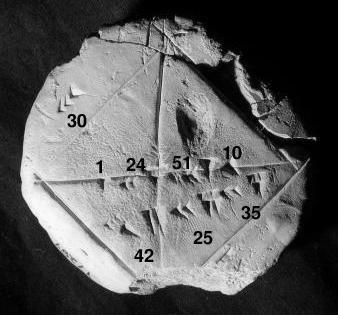
    Babylonian Tablet for 
square root of 2.
 (Wikipedia)
Prediction implies a mechanics, as in knowing a form of a trajectory over time.  Strictly speaking a predictive system implies knowing a solution to the path, set of variable depending on time, time evolution of the system under consideration. Here, we define semi-informally how a prediction system is defined mathematically and show how non-temporal learning can be mapped into a prediction system. 

Temporal learning : Recurrence, trajectory and sequences

A trajectory can be seen as a function of time, identified in recurrence manner. It means $x(t_{i})=f(x_{i-1})$. However, this is one of the possible definitions. The physical equivalent of this appears as a solution to ordinary differential equation, such as the velocity $v(t) = dx(t)/dt$, recurrence on its solution. On the other hand machine learning, an empirical approach is taken and a sequence data such as natural language or a log events occurring in sequence. Any modelling on such data is called temporal learning. This includes classical time-series algorithms, gated units in deep learning and differential equations.

Definition: A prediction system  $\mathscr{F}$ that is build with data $D$ but utilised for a data that is not used in building it $D'$, qualified as such if both $D$ and $D'$ are temporal sets and output of the system is a horizon $\mathbb{H}$, that is a sequence. 

Using non-temporal supervised learning is interpolation or extrapolation

Often practice in industry to turn temporal interactions into flat set of data vectors,  $v_{i}$, $i$ corresponds to a time point or an arbitrary property of the dataset resulting in breaking the temporal associations and causal links.  This could also manifest as set of images with some labels which has no ordering or associational property in the dataset. Even though our system build upon these non-temporal datasets, indeed it constituted a learning systems as interpolation or extrapolation. Their utility in using them for $D'$, strictly speaking does not qualify as prediction systems. 

Mapping with pre-processing

A mapping indeed possible from non-temporal data to a temporal one, if their original form is not in temporal form yet. This is been studied in complexity literature. This requires an algorithm to map flattened data vectors we mentioned into a sequence data. 

Mapping with Causality

A distinct models from causal inference are qualified as predictive systems even if they are trained on non-temporal data, because causality establishes a temporal learning.

Non-temporal modals: Do they still learn?

Even though, we exclude non-temporal model utilisation as non-predictive systems, they still classified as learned models. Because their outputs are generated by a learning procedure. 

Conclusion

Differentiation among temporal and non-temporal learning is provided in associational manner. This results into definition of a prediction system, that excludes non-temporal machine learning models: such as models for unlinked set of vectors, a set of numbers mapped from any data modality. 

Further reading & postscript notes


Tuesday, 20 September 2022

Building robust AI systems: Is an artificial intelligent agent just a probabilistic boolean function?


Preamble
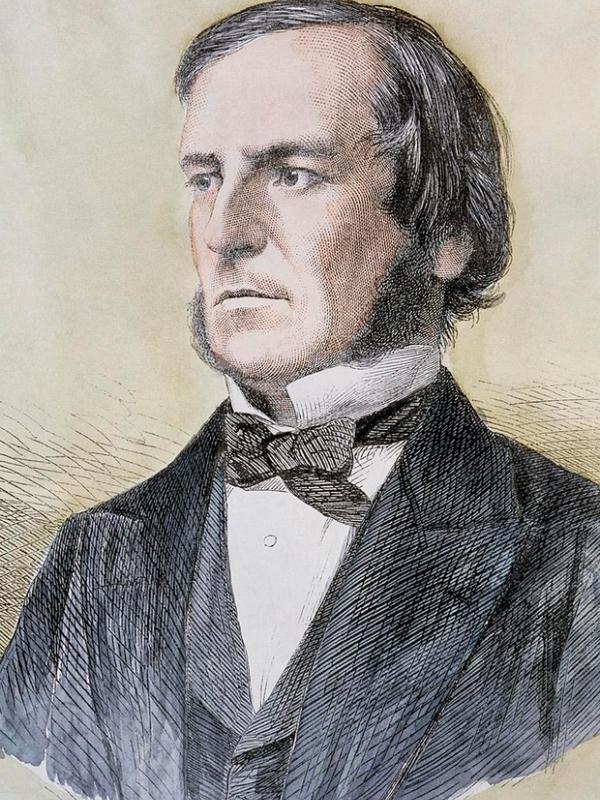
    George Boole (Wikipedia)

Agent, AI agent or an intelligent agent is used often to describe algorithms or AI systems that are released by research teams recently. However, the definition of an intelligent agent (IA) is a bit opaque. Naïvely thinking, it is nothing more than a decision maker that shows some intelligent behaviour. However, making a decision intelligently is hard to quantify computationally, and probably IA for us is something that can be representable as a Turing machine.  Here, we argue that an intelligent agent in the current AI systems should be seen as a function without side effects outputting a boolean output and shouldn't be extrapolated or compare to human level intelligence.  Causal inference capabilities should be seen as a scientific guidance to this function decompositions without side-effects,  i.e., Human in-the loop Probabilistic Boolean Functions (PBFs).

Computational learning theories are based on binary learners

Two of the major  theories of statistical learning PAC and VC dimensions build upon on "binary learning".  

PAC stands for Probably Approximately Correct, It sets basic framework and mathematical building blocks for defining a machine learning problem from complexity theory. Probably correct implies finding a weak learning function given binary instance set $X=\{1,0\}^{n}$. The binary set or its subsets mathematically called concepts and under certain mathematical conditions a system said to be PAC learnable. There are equivalences to VC and other computation learning frameworks. 

Robust AI systems: Deep reinforcement learning and  PAC

Even though the theory of learning on deep (reinforcement) learning is not established and active area of research. There is an intimate connection with composition of concepts, i.e., binary instance subsets as almost all operations within  deep RL can be viewed as probabilistic Boolean functions (PBFs). 

Conclusion 

Current research and practice in robust AI systems could focus on producing learnable probabilistic boolean functions (PBFs) as intelligent agents, rather than being a human level intelligent agents. This modest purpose might bring more practical fruit than long-term aims of replacing human intelligence. Moreover, theory of computation for deep learning and causality could benefit from this approach. 

Further reading


(c) Copyright 2008-2024 Mehmet Suzen (suzen at acm dot org)

Creative Commons License
This work is licensed under a Creative Commons Attribution 4.0 International License.